INFO
More Information About SanYue


As global industrial manufacturing transitions toward greater precision and intelligence, the industrial thermal management market in 2026 is undergoing a profound transformation. In fields such as laser processing, semiconductor packaging, and digital induction heating equipment, internal device space is becoming increasingly constricted by integrated circuits and power components; yet, this rising component density simultaneously generates higher thermal density. How can efficient heat exchange be achieved within a "palm-sized" space—using compact centrifugal fans—while simultaneously meeting the low-noise environmental requirements of modern digital factories? This has emerged as a core challenge facing automation integrators and technical directors alike.
I. Why Do "Small Sizes" Often Struggle to Deliver "Big Performance"?
According to traditional fluid dynamics principles, air pressure is typically directly proportional to impeller diameter. For small-sized fans to generate high air pressure, the prevailing trend in 2026 is no longer a singular pursuit of "airflow volume," but rather a quest for a balance between "effective static pressure" and "acoustic quality." This implies that fans must possess superior airflow control capabilities. Typically, this necessitates increasing rotational speed; however, this directly gives rise to two critical pain points:
High-Frequency Noise: High-speed blade rotation generates sharp aerodynamic noise through friction with the air, negatively impacting the workshop environment and employee well-being.
Vibration Risk: Small-diameter impellers operating at high speeds demand extremely precise dynamic balancing; even minute errors can trigger resonance, thereby shortening the overall service life of the equipment.
II. From Flow Field Simulation to Precise DSP Control
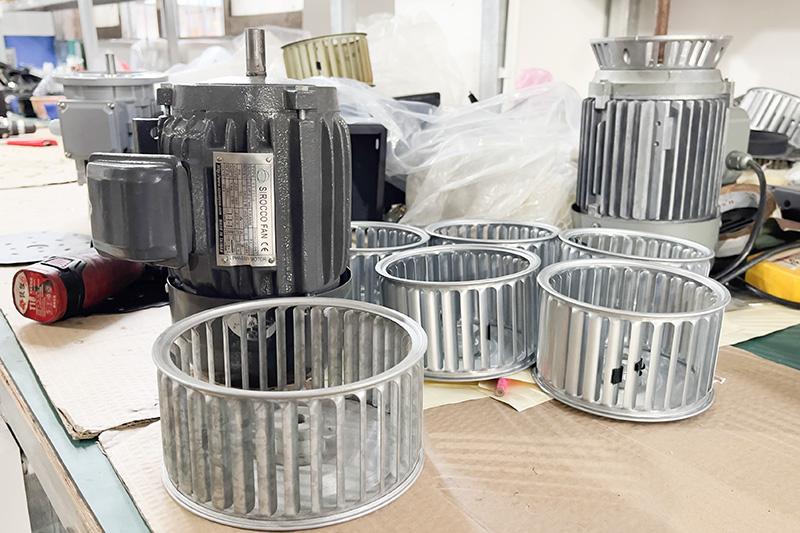
As a manufacturer with years of deep expertise in air-moving products, Dongguan Sanyue Precision Electromechanical Co., Ltd. is a technology-driven enterprise dedicated to the integrated R&D, manufacturing, sales, and after-sales service of a diverse range of air-moving solutions—including various specifications of high-temperature centrifugal fans, high-temperature motors, and long-shaft motors. Our products have obtained numerous certifications, including CE, FCC, and RoHS. Contact us: service@sanyuejd.com. We have identified that the key to resolving the aforementioned conflicts lies in the "precision of airflow control." Through the application of digital technologies, compact centrifugal fans are currently undergoing the following evolutionary advancements:
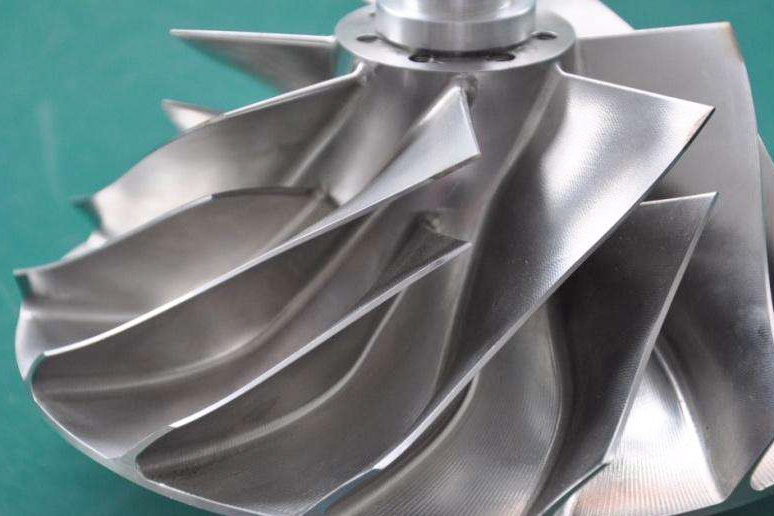
1. 3D Flow Impeller Design: Utilizing simulation software to conduct multi-dimensional modeling of the internal flow field within the impeller, thereby optimizing the blade exit angles. This design enables the centrifugal impeller to generate greater centrifugal force even at lower rotational speeds, thereby maintaining a stable static pressure output while overcoming the resistance posed by the dense heat sink fins within the equipment.
2. DSP Full-Digital Drive Matching: Leveraging the latest DSP digital control technology, the fan achieves smooth, stepless speed regulation. Compared to traditional analog systems, the digital drive precisely detects changes in system resistance and automatically adjusts torque, thereby preventing unnecessary energy waste and eliminating mechanical noise caused by speed fluctuations.
III. A "Hardware-and-Software" Approach to Low-Noise Standards: In compact cooling solutions, noise control constitutes a comprehensive systems engineering challenge:
Hardware Layer: Employs high-precision G2.5-grade dynamic balancing calibration to ensure the impeller remains as stable as a gyroscope—even under heavy loads—thereby minimizing structural noise caused by mechanical friction.
Software Layer: Optimizes current waveforms through advanced algorithms to suppress electromagnetic noise generated during motor operation at its very source.
For automation integrators, fan selection should not be based solely on the maximum airflow figures listed in the datasheet; rather, greater attention should be paid to the smoothness of the air pressure curve and the stability of long-term operation. This is particularly critical when integrating fans into industrial chillers or high-frequency induction heating equipment, where a digitally controlled fan—characterized by smooth operation and ease of maintenance—can significantly reduce the overall after-sales service rate for the complete system. The future of industrial thermal management lies not in sheer physical bulk, but in smarter airflow dynamics. Selecting compact airflow products that comply with the new 2026 standards is a pivotal step in empowering equipment to achieve a "dimensional advantage" in the competitive landscape.

Address:No. 6, Xinji Lane 1, Yuanjiayong, Zhongtang Town, Dongguan City, Guangdong Province
Website:https://www.sanyuejd.com
E-mail:service@sanyuejd.com

